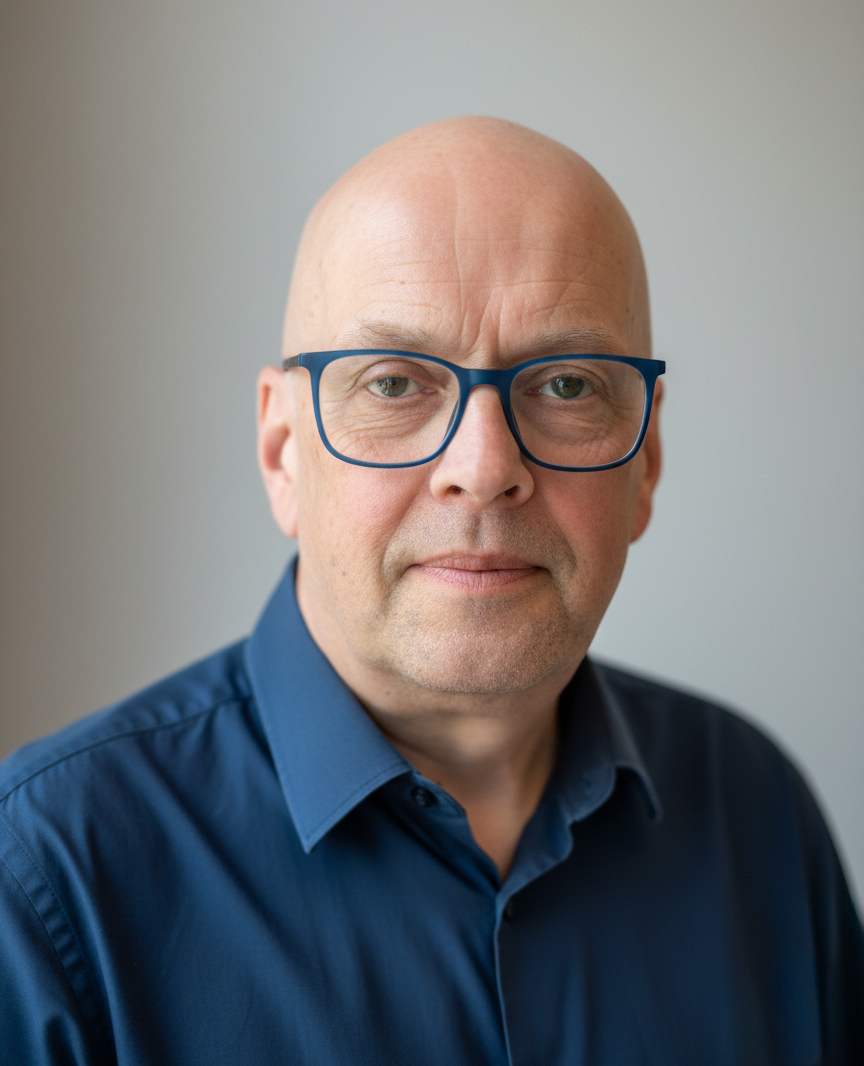
THE PERSON BEHIND DERBY PIANO ACADEMY
Hello, I'm Ed.
I've been teaching piano for more than 40 years.
And one thing all those years have taught me is that people don't all learn in the same way.
Something that makes perfect sense to one pupil may leave another completely puzzled.
That's fine. We find another way.
My job isn't simply to tell you what notes to play. It's to help you understand what you're doing, develop the skills to do it well — and enjoy becoming able to do something you couldn't do before.
I'm an experienced pianist and piano and keyboard teacher. Through Derby Piano Academy, I teach adults and children in Derby and live online.
EXPERIENCE WITHOUT A FIXED FORMULA
40+ years teaching.
Still learning.
You might imagine that after all this time I'd have settled on one method that works for everyone. Teaching has shown me quite the opposite.
Different people respond to different explanations, different pacing and different kinds of encouragement. Even with the same pupil, something that helped last week may not be the most useful approach today.
Experience should give a teacher more ways to explain something, and a better sense of when to try another approach. The number of years matters less than what you've learned from them.
Experience isn't about teaching the same lesson for 40 years. It's about having 40 years of ways to find another one.
MUSIC FIRST
You don't have to be a music scholar to love making music.
Learn well.
Enjoy learning.
Technique matters. Rhythm matters. Reading music matters. Understanding what you're playing matters.
But those things aren't barriers you have to get through before you're allowed to enjoy music. They're tools that help you do more with it.
I want pupils to learn properly while remembering why most of them came to the piano in the first place: they wanted to play.
Theory, technique and musical knowledge help that happen. They belong in the music, rather than standing between you and it.
A GOOD LESSON CAN HAVE A GOOD LAUGH
Learning seriously doesn't mean being serious
all the time.
You can laugh during a lesson and still work on correct technique. An adult can play music they enjoy while developing notation, rhythm and musicianship. A child can be excited about mastering a piece without an examination waiting at the end of it.
Questions, mistakes and moments when something goes completely wrong are normal parts of learning. Occasionally your left hand has other plans. We work out what happened and try again.
I want you to feel comfortable enough to ask, experiment and have another go. A relaxed atmosphere gives us room to do useful work.
WHAT HAPPENS WHEN YOU DON'T GET IT?
We try
something else.
If an explanation hasn't helped, saying it again in exactly the same way may not get us very far.
We might listen to an example, try a movement more slowly, break a passage into smaller parts or approach the idea from a different direction. Different explanations, demonstrations and examples can help different people at different moments.
Sometimes we need to find out which part of the problem is actually causing the trouble. Once that's clearer, the next step often becomes more manageable.
If one explanation doesn't make sense, we find another way.
PROPER MUSICAL FOUNDATIONS
Relaxed doesn't mean vague.
Fun doesn't mean we're not learning.
Comfortable technique and coordination make playing easier to approach. Musical notation, rhythm and timing help you understand what the music asks for. Listening helps you hear what is working and what could be different.
Scales, chords and harmony have a place where they're useful, because recognising patterns can make a piece less mysterious. Practical music theory connects what you read and hear to what you're doing at the keyboard.
Interpretation and musicianship are about making musical choices, not simply getting through the notes. Learning how to practise effectively helps you work through difficulties between lessons.
These things develop through the music and the questions in front of us. The purpose is greater independence and freedom at the instrument: understanding enough to make music for yourself.
A GOAL, IF IT'S YOUR GOAL
Exams are an option,
not the destination.
I can support pupils who want to work towards ABRSM examinations. For some people, an exam provides a useful goal and something they enjoy working towards.
Other pupils simply want to become better players and enjoy making music. That's an equally good reason to learn.
Examinations are optional. Neither motivation matters more than the other; what matters is helping you learn well and make meaningful progress.
HOW LESSONS WORK
A proper lesson,
wherever you're learning.
Most Derby Piano Academy lessons now take place live online through Google Meet. You'll learn at your own piano or keyboard, with Ed teaching you individually — listening, demonstrating, guiding and helping you make progress at your own pace.
For some younger complete beginners in Derby, face-to-face lessons at home may be considered where appropriate and practical, particularly while early foundations are being established. There's no fixed timetable for moving online; it depends on the individual child.
The teaching remains personal, encouraging and carefully adapted to the person at the piano.
WHAT LEARNING WITH ED FEELS LIKE
“I've been having piano lessons with Ed for about 3 months now. What an amazing teacher he is, every lesson is well structured and challenging and set at a pace that suits me perfectly.”
WHY I STILL ENJOY IT
The best part
hasn't changed.
After all these years, there's still something rather special about watching somebody do something at the piano that they couldn't do a week ago.
Sometimes it's a whole piece.
Sometimes it's four bars.
Either way, that little look that says ‘I can actually play this’ never gets old.
Come and say hello.
If you've been thinking about learning piano or keyboard — for yourself or your child — we can start with a lesson and see how it feels.
YOUR FIRST LESSON IS ON ME.