PIANO & KEYBOARD LESSONS FOR CHILDREN · DERBY & ONLINE
Learning they can
look forward to.
Children learn best when they feel comfortable enough to ask questions, make mistakes, try again — and enjoy themselves along the way.
Piano and keyboard lessons for children in Derby combine proper musical foundations with an encouraging, positive way of learning.
They'll learn to read music, develop rhythm and technique, understand what they're playing and gradually become more confident at the instrument.
And yes, we're allowed to laugh as well.
YOUR CHILD'S
FIRST LESSON
IS ON ME.
ENJOYMENT & PROPER MUSICAL DEVELOPMENT
Learning properly doesn't
have to feel like school.
Learning seriously doesn't mean being serious all the time.
Good piano and keyboard teaching includes technique, reading notation, rhythm, listening, musical understanding and appropriate practice. But your child doesn't need to experience those things as a dry academic syllabus.
We can explore a rhythm, listen to what changes when a phrase is played differently, or try a new way of moving the fingers. Curiosity, conversation, demonstrations and having another go all help turn an explanation into understanding.
A child can make a mistake, ask a question or laugh during a lesson and still learn good technique. Enjoyment and proper musical development belong together.
BEGINNER PIANO & KEYBOARD LESSONS
Everyone
starts somewhere.
Your child doesn't need previous musical knowledge before beginning piano or keyboard lessons. The first steps are part of the teaching, not something you need to arrange beforehand.
Early lessons gradually introduce the geography of the keyboard, finger coordination, rhythm, musical notation and listening through actual music-making.
Finding a note, hearing a pattern and playing a simple phrase give new ideas a practical meaning. We build from what your child understands, keeping each next step manageable rather than turning the beginning into a pile of schoolwork.
SKILLS THAT HELP THEM MAKE MUSIC
What will my child
actually learn?
Children's piano and keyboard lessons develop the skills that make playing more comfortable, expressive and independent. Each foundation has a musical purpose; it isn't simply another thing to tick off.
- Technique & coordination
- Comfortable posture and movement help children use their hands without unnecessary tension. Coordination develops as the hands learn to work together in real music.
- Reading music
- Musical notation becomes a way to discover what to play. We connect notes and markings to sounds and keys, so reading supports music-making rather than feeling like a separate hurdle.
- Rhythm & timing
- Feeling a pulse and recognising rhythmic patterns help music flow. We work on how notes fit together in time, not only on finding the correct keys.
- Listening
- Learning to listen helps children notice the sound they make: whether a melody is clear, a rhythm is steady or a phrase could be shaped differently.
- Scales, chords & patterns
- Where useful, scales and chords reveal patterns in music and on the keyboard. Recognising them can make unfamiliar passages easier to understand and approach.
- Practical music theory
- Musical ideas make more sense when they explain something a child is playing. Theory helps connect what they read, hear and do at the instrument.
- Expression & interpretation
- Changing touch, phrasing and volume gives music character. Children learn to make thoughtful musical choices rather than treating every note in the same way.
- Independent playing
- Understanding the music and how to work through a difficulty helps a child become less dependent on someone telling them every next note.
- Useful practice habits
- Knowing what to work on and how to try it helps practice have a purpose. We develop habits suited to the child and the music they are learning.
Good foundations give children more freedom to make music.
A DIFFERENT WAY OF EXPLAINING
What if something
doesn't make sense?
Children don't all understand an explanation in the same way, or at the same speed. Something that is obvious to one pupil can leave another wondering what on earth we're talking about.
More than 40 years of teaching has taught Ed the importance of adapting explanations, pacing and challenge to the pupil. Repeating the same instruction more loudly isn't usually the answer.
If one explanation doesn't make sense, we find another way.
We might break an idea into smaller steps, listen to it, demonstrate it or try it differently. The aim is understanding, rather than expecting every child to learn identically.
FAMILIAR FAVOURITES. NEW DISCOVERIES.
Music they
can enjoy.
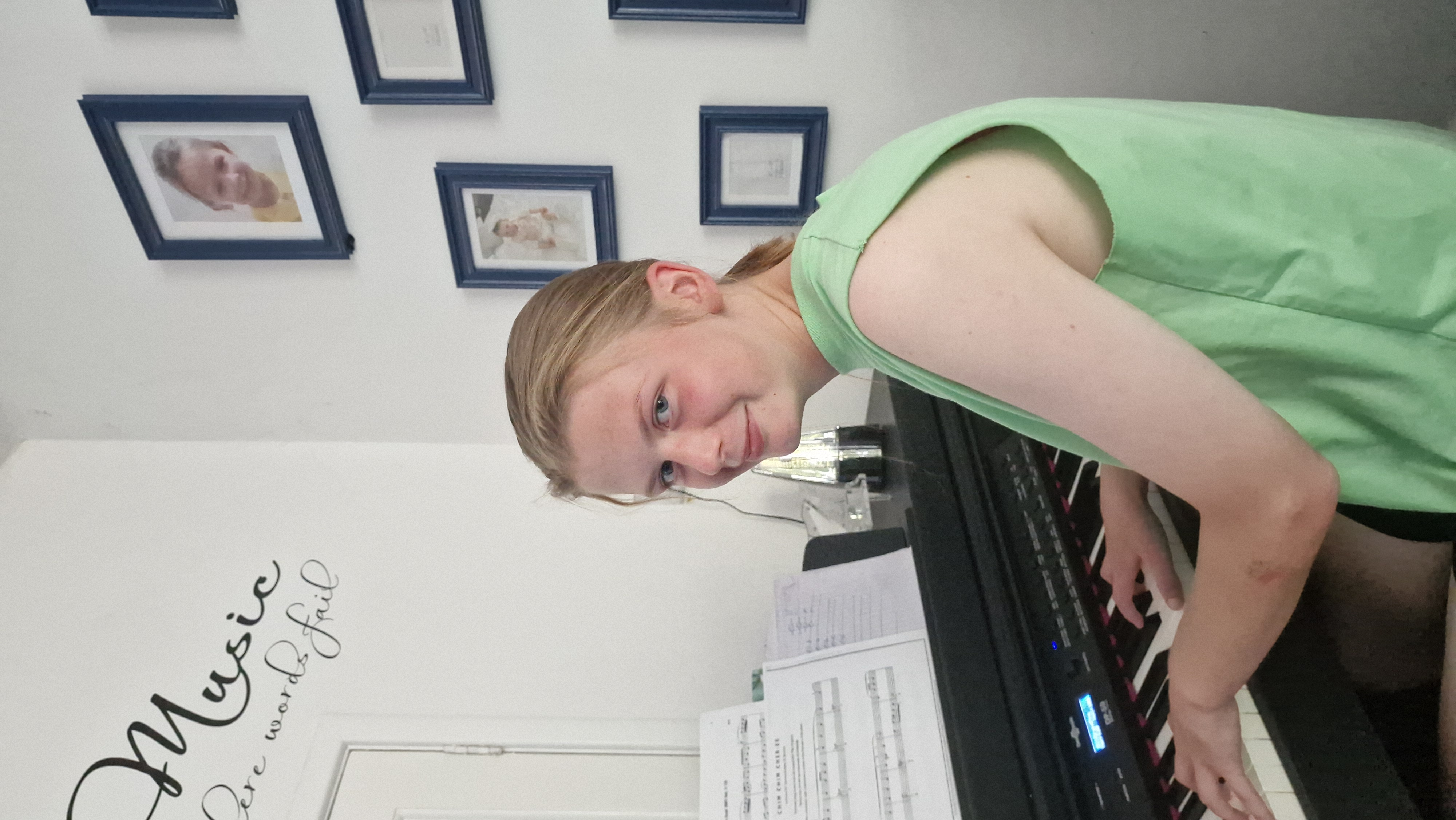
Your child's musical interests can help inform the music we explore. Enjoyment gives them a reason to listen closely, try again and take an interest in what they're learning.
Not every requested piece will suit their current skills. Sometimes an appropriate arrangement makes it approachable; sometimes it is something to work towards.
Ed may also introduce music because it develops a useful skill or brings something new into the lesson. Part of learning music is discovering something you didn't know you would enjoy.
Good musical habits don't have to come at the expense of having a good time.
PRACTICE THAT HAS A PURPOSE
Practice without turning
home into a battleground.
A little purposeful practice is worth more than a lot of reluctant clock-watching.
Regular practice helps children become more familiar with the instrument and carry ideas from one lesson to the next. It works best when they understand what they're practising and what they're trying to improve.
There isn't one universal number of minutes that suits every child. Useful, sustainable habits depend on their stage of development, the music they're learning and what feels manageable.
A specific task — such as finding a comfortable way through a few bars or keeping a rhythm steady — can be more helpful than simply being told to practise longer.
If practice is becoming a struggle, speak to Ed. We can look at what is difficult and adjust the approach without making either parent or child feel guilty.
EXAMS ARE AN OPTION
Does my child
have to take exams?
No.
ABRSM piano examinations are available where they suit the pupil and provide a useful goal. They aren't compulsory, and they aren't the definition of musical progress.
A child can learn properly, develop musicianship and become a confident player without following an examination pathway. Enjoyment, understanding and being able to make music are worthwhile goals in their own right.
HOW LESSONS WORK
The right start
for your child.
Most Derby Piano Academy lessons now take place live online, including lessons for children.
For some younger complete beginners, however, a little extra hands-on guidance at the start can be helpful. Where appropriate and practical within Ed's Derby teaching area, face-to-face lessons at home may be considered while those early foundations are established.
There isn't a fixed timetable for moving online. It depends on the individual child — their confidence, independence at the instrument and how they're progressing.
The aim is simple: give them the support they need at the beginning, and help them become increasingly confident learning at their own instrument.
Learn about online lessons →LIVE ONLINE LESSONS
Learning from
their own piano.
Most Derby Piano Academy lessons now take place live online, including lessons for children. Your child learns at the piano or keyboard they practise on every day, with Ed teaching them live through Google Meet.
The lesson is still individual, encouraging and properly structured — with technique, reading, rhythm, theory and musicianship developing alongside the music itself.
See how online lessons work →BEFORE YOU BUY
No piano or
keyboard yet?
Don't buy an instrument blindly before lessons begin. Ed can offer practical, impartial guidance about suitable pianos or digital keyboards and what your child will actually need.
A conversation first can help avoid unnecessary expense or buying something unsuitable.
Ask Ed about instruments →A PARENT'S EXPERIENCE
“My son has had Ed teaching him now for well over a year. He has always been very professional and courteous.”
QUESTIONS PARENTS ACTUALLY ASK
A little
reassurance.
Does my child need any musical experience before starting?
No. Beginner piano and keyboard lessons introduce the keys, coordination, rhythm, notation and listening gradually through making music.
Does my child need a piano or keyboard before the first lesson?
Talk to Ed before buying anything. Explain what you already have, if anything, so he can advise on a suitable instrument and what is needed for lessons and practice at home.
Do you teach piano and keyboard?
Yes. Derby Piano Academy provides children's piano lessons and children's keyboard lessons. Ed can help you decide which instrument would suit your child.
Do children have to take piano exams?
No. ABRSM examinations are available as an optional goal. Children can develop technique, musical understanding and confidence without taking exams.
How much should my child practise?
Regular, purposeful practice helps. The right approach depends on your child, their stage of learning and the music they're working on. Ed can help you develop manageable habits rather than prescribe one number of minutes for everyone.
Where do in-person lessons take place?
In your child's own home, where home teaching is appropriate and practical. Ed visits pupils selectively across Derby and relevant surrounding areas, particularly when a younger complete beginner would benefit from hands-on support with early foundations. You don't need to take your child to a teaching studio. Ask him about your location and your child's needs when you get in touch.
Can children learn piano online?
Yes. Children can learn very successfully live online with Ed. For some younger complete beginners, face-to-face support may be helpful while the earliest foundations are established. This depends on the individual child rather than a fixed age or timetable.
Give them the chance to discover what they can do.